
Industries
Veterinary Clinic Cleaning in Fairfield
After-hours cleaning for animal hospitals and small-animal practices around Fairfield: lobbies, exam rooms, treatment areas, wards and restrooms done to your clinic’s own protocol.
Printable checklist
Clinics that see pets from open to close
Veterinary practices around Fairfield, Suisun City, Vacaville and Vallejo come in many shapes: one-doctor offices in shopping centers, full-service animal hospitals with surgery suites, and clinics that add boarding or grooming. All of them carry a load an ordinary office never sees. Fur drifts into every corner, paws track the parking lot inside, and by evening the building holds the smell of a long day.
Fairfield Janitorial arrives after the last appointment, once your team has settled any overnight patients. The goal is simple: the front desk opens the next morning to a lobby that smells neutral, floors that are dry and clean, and exam rooms ready for the first pet on the schedule.
The lobby, the scale and the check-in desk
The waiting room takes the most wear. Crews vacuum hair out of chair seams and along baseboards, wipe the check-in counter, the card reader and the retail shelf of food and leashes, and clear nose prints from the entry glass and the lower half of every door. The walk-on scale is cleaned and dried so nothing lingers on its mat.
Hard floors get a pass with a hair-catching dust mop before any water touches them, which keeps fur from turning into a gray film along the walls. Where a clinic keeps separate dog and cat waiting areas, each one is cleaned as its own zone with its own cloths, so scents from one side don’t carry to the other.
Exam rooms reset to your written steps
Each exam room is cleaned in the order your practice sets down: the table, counters, sink, cabinet handles, stool seats, door levers and the low stretch of wall that animals brush against all day. The disinfectant is EPA-registered, picked by your clinic if it has a favorite, and each surface stays visibly wet until the label’s dwell time has passed.
Every crew member has completed bloodborne-pathogen safety training and works with HIPAA-aware discretion. Client files, charts and screens stay exactly where staff put them, and nothing a crew member sees is repeated outside the clinic. Owners trust a clinic with their animals’ records, and the cleaning crew treats those files with the same care.
Treatment floors, surgery suites and wards
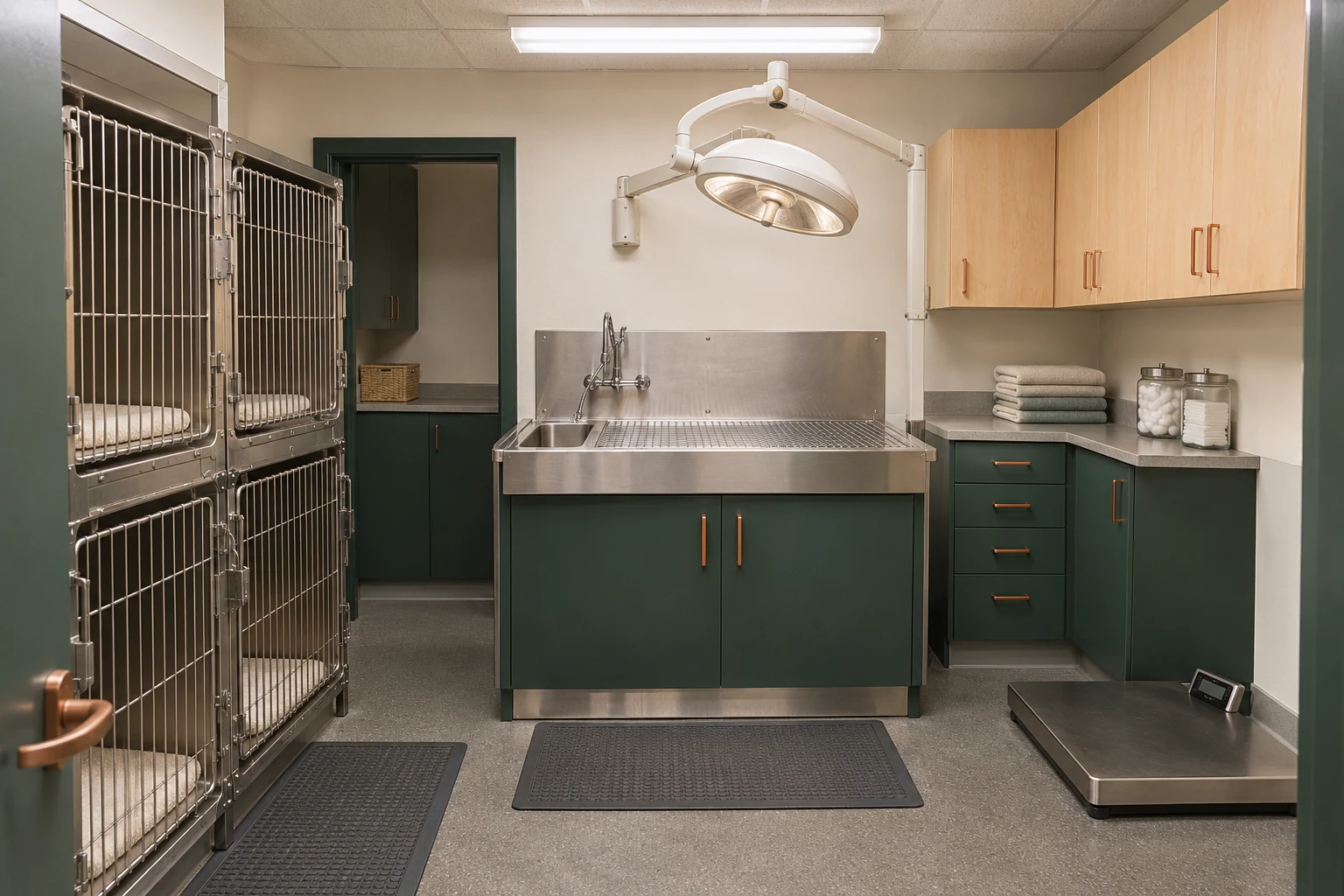
Behind the exam rooms are the spaces that work hardest: the treatment floor, the prep area, the surgery suite, the lab corner and the wards where patients stay the night. Floors, walls, door faces, counters and the outside of cages and cabinets are cleaned in the sequence your protocol calls for, moving from the cleanest rooms toward the most soiled ones.
When a surgery suite or isolation room needs a complete reset, terminal cleaning can be booked for it, covering walls, fixtures, equipment exteriors and floors in a single visit. Floor drains in wards and wash areas are scrubbed and flushed, and mop heads used in clinical rooms are bagged on their own rather than carried back to the lobby. Clinics that want a broader touchpoint program can add disinfection and sanitizing visits.
Restrooms, break rooms and the staff side
Client restrooms are cleaned top to bottom and restocked each visit, with paper towels, soap and can liners that we can provide through janitorial supplies, or that come off the clinic’s own shelves. The staff break room, doctors’ offices and the pharmacy counter get emptied trash, wiped surfaces and vacuumed or mopped floors, so the people caring for the animals start their shift in rooms that feel looked after too.
Trash from the lobby, offices and break room goes out every visit with fresh liners behind it, and the walk-off mats at the door get a thorough vacuuming so the walk in from the car makes a better first impression on the next morning’s clients.
Floors built for claws, carts and constant mopping
Clinic floors are usually sheet vinyl, VCT or sealed concrete, and nails, gurney wheels and nightly wet work dull them quickly. Our floor care crews machine scrub, burnish, or strip and refinish VCT on a calendar that avoids surgery days, which leaves a tighter finish that releases hair and residue more easily night after night. Carpet in consult rooms and offices can be extracted on a periodic schedule.
After closing, with a supervisor’s check
Cleaning runs after hours on the nights you choose, and a practice open on Saturdays can add a Sunday visit so Monday starts fresh. The crew is background-checked, a supervisor inspects finished rooms against the clinic’s checklist, and your office manager receives a certificate of insurance for the vendor file. Book a free clinic walkthrough, show us your exam rooms and wards and tell us when the last appointment ends, and we’ll send a written quote for the after-hours schedule and monthly price.
Common questions
Can you clean while boarded animals stay overnight?
Yes. Crews work quietly in and near the wards, close each door behind them and keep to the lighting and noise rules your team sets, so overnight patients are left undisturbed.
Which disinfectant goes on the exam tables?
The one your practice chooses, or an EPA-registered product we bring. Either way, it sits on the table untouched until the dwell time on its label is up, and only then is the surface wiped dry.
Can the surgery suite be cleaned more deeply than the rest of the clinic?
Yes. Terminal cleaning can be scheduled for the surgery suite or an isolation room on its own calendar, covering walls, fixtures, equipment exteriors and floors in one visit.
How do you keep pet odor out of the lobby?
Lobby odor builds from hair and residue left in corners, drains and seating seams. Crews vacuum those spots, scrub the floor drains, damp-wipe the low walls and wash the floor every visit, which removes the source instead of masking it.
Can grooming and boarding rooms join the same plan?
Yes. Grooming tables, tubs and dryer stations are wiped down, hair is cleared from floors and drains, and boarding rooms get the same floor and wall cleaning as the wards, all inside one monthly schedule.
Services